
|
Will Morris was also in the Global Tax 50 2015, 2014, 2013, and 2012 |
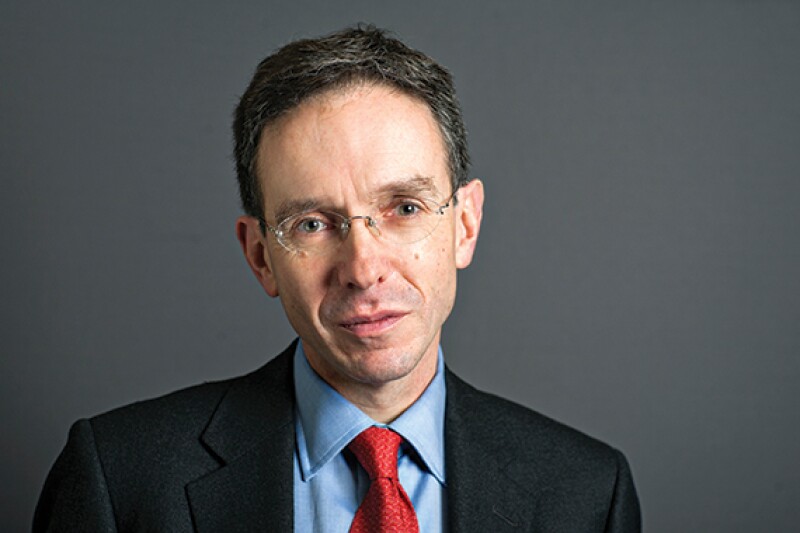
Will Morris has made it into nearly every edition of the Global Tax 50 and this year is no exception. Five years' worth of achievements and influence, and it's fair to say that Morris has continued to have an impact on tax at the international level.
Morris is a key business figure in the tax community. His involvement in the OECD's BEPS Project has maintained the business community's voice in the discussions. Morris encourages businesses to stay active at the international organisational level and to have their voice heard by engaging in the OECD's business survey. The survey gathers information on the effects of direct and indirect tax systems on business behaviour. "This is the best chance and probably the biggest chance in the next period of time that business has to have a positive input in this growth agenda, which is just crucial," Morris told International Tax Review. "The OECD is appropriately anxious to broaden the debate out from just being about BEPS and anti-avoidance to encompass the issue of inclusive economic growth. They are interested in those things that block cross-border trade and investment, as well as those things which encourage them." Morris said that the signing of the business survey with Pascal Saint-Amans, OECD director of the Centre for Tax Policy and Administration, at the G20 Tax Policy Symposium in July 2016 in China was his proudest moment of 2016. Increasing tax certainty to promote investment and trade in a world where value creation is changing has remained a significant part of his work.
Reflecting on the progress of the BEPS Project, Morris said that businesses can keep their momentum by being constructively involved in the discussions and by putting pressure on their own governments to "make it work". Although there are a number of concerns swirling around from individual industries, Morris said that remaining positive on the development of these policies is important to achieve progress. He points businesses towards the Business and Industry Advisory Committee's BEPS app to stay on top of implementation and application in an organised way. The purpose of the app is therefore to enable users to quickly, easily, and securely submit their experiences or any interesting BEPS news that they become aware of to a central BIAC database.
"On the surface, this year has been a quieter year, but there's been a huge amount of work going on behind the curtains," Morris said. He highlighted the conclusion of the Multilateral Instrument, which will swiftly implement a series of tax treaty measures to update international tax treaty rules and lessen the opportunity for tax avoidance by MNEs, as being a major project below the surface throughout 2016.
However, Morris said that there has been a "considerable element of fatigue that has set in the business community", much in the same way that there has been at the OECD and at government worldwide. "Nevertheless, I think we have managed to keep it going," he said.
For 2017, Morris said he will be "continuing to try to improve the perception of business, while at the same time ensuring that we do all that we can to promote growth and to keep people's faith in trading and investing cross-borders".
"There's a tendency right at the moment to look inwards and while that's totally understandable that's not going to help us in the end," he added. Trying to keep businesses involved, maintaining positivity and being constructive will be a part of Morris's work in the year ahead.
He will remain an influential individual to watch in the tax world.
The Global Tax 50 2016 |
|
|---|---|
The top 10 • Ranked in order of influence |
|
2. The International Consortium of Investigative Journalists |
|
3. Brexit |
4. Arun Jaitley |
5. Jacob Lew |
|
10. Donald Trump |
|
The remaining 40 • In alphabetic order |
|








