Global Tax 50 2016: The Gulf Cooperation Council (GCC)

International Tax Review is part of Legal Benchmarking Limited, 1-2 Paris Garden, London, SE1 8ND

Copyright © Legal Benchmarking Limited and its affiliated companies 2026

Accessibility | Terms of Use | Privacy Policy | Modern Slavery Statement

Global Tax 50 2016: The Gulf Cooperation Council (GCC)

The Cooperation Council for the Arab States of the Gulf

 The Gulf Cooperation Council (GCC)

The Gulf Cooperation Council (GCC) is a new entry this year

A new entrant for this year is the Gulf Cooperation Council (GCC), which is changing the tax landscape of the Middle East forever.

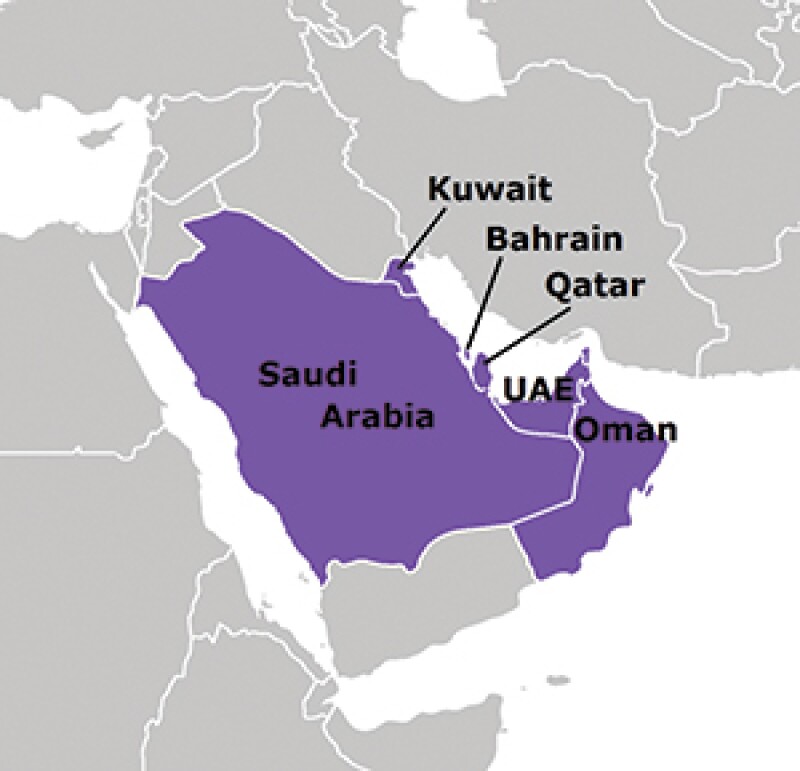
The council is made up of six member states, namely the United Arab Emirates, Bahrain, Saudi Arabia, Oman, Qatar, and Kuwait. It was established in 1981 to join the six states in a framework fostering effective coordination, integration and inter-connection in all fields in order to achieve unity, according to Article 4 of the GCC Charter.

In 2016, the member states finally agreed to introduce a VAT regime to plug revenue gaps created from the fall in oil prices. Over the year, a multilateral agreement was concluded in principle to implement VAT, and each country has worked towards developing the structure, compliance requirements and rates of the new VAT regime. This big change has put the GCC firmly on the tax map and in this year's Global Tax 50. But this is only the beginning. Businesses worldwide are paying attention to what is happening as this VAT regime may be the first of several tax regimes that could be introduced in the region over the coming years to sustain tax revenues.

So far this year, all six member states have committed to introducing VAT from January 1 2018, at a rate of 5%. All member states will have a VAT by the beginning of 2019 and companies are gearing up for the change.

The progressive implementation of VAT throughout the GCC from January 1 2018 marks the "start of some of the most exciting, dramatic and far-reaching socioeconomic changes in the region since the discovery of oil reserves in commercial quantities during the 1960s", said Justin Whitehouse, Deloitte Middle East indirect tax leader.

The Global Tax 50 2016

View the full list and introduction

The top 10 • Ranked in order of influence

1. Margrethe Vestager

2. The International Consortium of Investigative Journalists

3. Brexit

4. Arun Jaitley

5. Jacob Lew

6. Antoine Deltour and Raphaël Halet

7. Operation Zealots

8. Guy Verhofstadt

9. Theresa May (and the 'three Brexiteers')

10. Donald Trump

The remaining 40 • In alphabetic order

Kemi Adeosun

Piet Battiau

Elise Bean

Monica Bhatia

Allison Christians

Tim Cook

Rita de la Feria

Caroline Flint

Judith Freedman

Chrystia Freeland

Pravin Gordhan

Orrin Hatch

Meg Hillier

Mulyani Indrawati

Lou Jiwei

Paul Johnson

Stephanie Johnston

Chris Jordan

Pravind Jugnauth

Wang Jun

Jean-Claude Juncker

Kathleen Kerrigan

Christine Lagarde

Werner Langen

Jolyon Maugham

Angela Merkel

Narendra Modi

Will Morris

Michael Noonan

Grace Perez-Navarro

Platform for the Collaboration on Tax

Donato Raponi

Pascal Saint-Amans

Heather Self

Robert Stack

Tax Justice Network

The Gulf Cooperation Council (GCC)

Transparency International

US Committee on Ways and Means

Rodrigo Valdés


more across site & shared bottom lb ros

More from across our site

If Trump continues to poke the world’s ‘middle powers’ with a stick, he shouldn’t be surprised when they retaliate
The Netherlands-based bank was described as an ‘exemplar of total transparency’; in other news, Kirkland & Ellis made a senior tax hire in Dallas
Zion Adeoye, a tax specialist, had been suspended from the African law firm since October over misconduct allegations
The deal establishes Ryan’s property tax presence in Scotland and expands its ability to serve clients with complex commercial property portfolios across the UK, the firm said
Trump announced he will cut tariffs after India agreed to stop buying Russian oil; in other news, more than 300 delegates gathered at the OECD to discuss VAT fraud prevention
Taxpayers should support the MAP process by sharing accurate information early on and maintaining open communication with the competent authorities, the OECD also said
The Fortune 150 energy multinational is among more than 12 companies participating in the initiative, which ‘helps tax teams put generative AI to work’
The ruling excludes vacation and business development days from service PE calculations and confirms virtual services from abroad don’t count, potentially reshaping compliance for multinationals
User-friendly digital tax filing systems, transformative AI deployment, and the continued proliferation of DSTs will define 2026, writes Ascoria’s Neil Kelley
Case workers are ‘still not great’ but are making fewer enquiries, making the right decision more often and are more open to calls, ITR has heard
Gift this article