
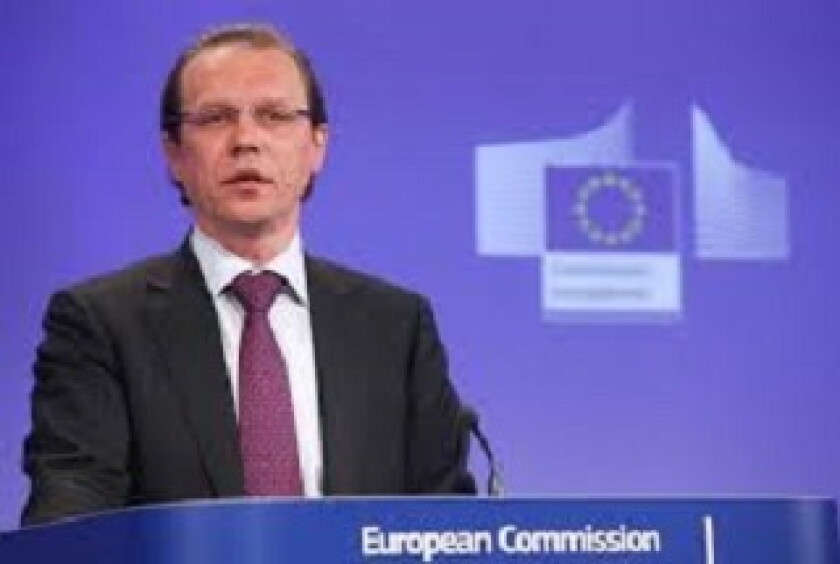
In a speech to the Intra-European Organisation of Tax Administrations, the outgoing EU tax commissioner pointed to existing and future European initiatives which he believes will help businesses comply more easily with tax rules, clamp down on tax evasion and aggressive tax avoidance, and ensure a fairer system for all taxpayers.
The commissioner highlighted three EU proposals: a standard VAT return, a European Taxpayers’ Code and a European Tax Identification Number, but also drew attention to work being done by the OECD on base erosion and profit shifting, and exchange of information.
“There have been many developments at national, EU and international level which should help improve tax compliance substantially over the coming years,” said Semeta. “Yet, at the same time, many countries are still facing difficulties in finding the tax revenues to finance their public policies, and compliance (or lack of it) remains a central challenge for tax administrations.”
Standard VAT return
The EU Commission’s proposal for a standard VAT return would harmonise the information required for declaring VAT, and the timelines to do it, across Europe, Semeta said.
“For cross-border businesses, it would bring major simplifications and maybe even incentivise smaller companies to expand cross-border. We estimate, in fact, that this proposal alone can save businesses €15 billion ($20 billion) a year by reducing their administrative burdens.”
He said it would also help tax authorities as taxpayers would understand better what was required of them.

Italy, which holds the six-month presidency of the EU Council, wants agreement on the standard VAT return by the time its term ends at the end of this year. It unveiled its tax work programme at the meeting of the council of economy and finance ministers (pictured left) on July 8.
European Taxpayers’ Code
The European Taxpayers' Code, Semeta said, was the subject of “intensive work” and would be “a blueprint for relations between taxpayers and their tax administrations”. In his view, the differences in the national taxpayers’ codes that exist in various member states make it difficult for individuals and companies to understand their rights and comply with the rules in cross-border situations.
“Therefore, a pan-EU Code would be an assistance to companies operating in our Single Market, and an asset to member states in improving compliance,” the commissioner said.
European Taxpayer Identification Number
Referring to another EU initiative, Semeta said a European Taxpayer Identification Number (TIN) would help to deal with the identification issues arising from the increased mobility of people and economic activity.
“This can undermine national efforts to collect taxes properly, lead to situations of double non-taxation and even facilitate tax fraud and evasion,” he said.
The idea is to create an online portal that would enable tax officials and businesses involved in cross-border transactions to check the structure of unique TINs.
The EU Commission is trying to act on recommendations from member states to improve tax governance, broaden the tax base and simplify tax systems throughout the bloc.
Semeta said the EU had a range of measures in place against non-compliance, including its action plan against evasion, efforts to combat tax avoidance, the implementation of automatic exchange of information, which has been endorsed by the G20 as the global standard, and its fight against VAT fraud.
Strengthened directives
The commissioner said two updated sets of EU tax rules would also help to encourage compliance and create fairer tax systems. The stronger Savings Tax Directive will increase transparency and administrative cooperation, and a revision to the Parent-Subsidiary Directive will mean companies will not be able to use hybrid loan arrangements to avoid taxes.
He said there was more to come before the end of 2014: agreement on the Administrative Cooperation Directive will ensure the widest scope of automatic information exchange within the EU and a further revision to the Parent-Subsidiary Directive will introduce a general anti-abuse rule.
“Meanwhile, the Commission continues to use every tool at its disposal – whether state aid rules or the Code of Conduct on Business Taxation – to ensure that member states play fair amongst themselves,” the commissioner said, referring to the recently-opened investigations into tax rulings in Ireland, the Netherlands and Luxembourg that may have breached state aid rules. The Commission is also assessing member states’ patent boxes under the Code of Conduct on Business Taxation.
“Member states need to work together in fighting evasion and facilitating compliance, rather than clinging to secrecy and engaging in harmful tax competition,” Semeta said.
The Commission is also negotiating with neighbouring states – Andorra, Liechtenstein, Monaco, San Marino and Switzerland - about stronger savings tax agreements, based on automatic information exchange. And it has just finished corporate tax discussions with Switzerland, which has seen that country agree to eliminate a number of harmful tax regimes that the EU objected to.







