The arrival of a team from Brazilian rival Costa Tavares Paes Advogados brings SiqueiraCastro’s tax headcount to seven partners and 30 associates

CSR initiatives can sometimes venture into virtue signalling, but Ryan’s tax literacy event for schoolchildren was a genuine and necessary endeavour

Grant Thornton advanced plans to integrate its Australian firm into its US arm, as tax developments spanned law firm hires, aviation levies and digital services taxes

A new focus on early intervention and increased AI use is transforming how tax authorities are approaching TP audits, though capacity-constrained jurisdictions risk falling behind
Sponsored
-
 Sponsored by Crowe Valente/Valente Associati GEB PartnersFederico Vincenti and Carola Valente Della Rovere of Valente Associati GEB Partners/Crowe examine a recent decision concerning the transfer pricing treatment of non-remunerated intra-group guarantees, focusing on economic substance, legal form, and group-level business justifications
 -
Sponsored by McCarthy TétraultThe key changes under Budget 2025 and the outlook for 2026 raise several areas of heightened focus for taxpayers, say Matthew Kraemer, Adam N Unick, and Justin Ng of McCarthy Tétrault
-
Sponsored by Lakshmikumaran & SridharanThe Tiger Global Supreme Court ruling weakens the status of tax residency certificates under tax treaties and increases substance‑based scrutiny, say S Vasudevan, Bharathi Krishnaprasad, and Krishna Laasya V of Lakshmikumaran & Sridharan


-
In 2017, China's State Administration of Taxation (SAT) completed its multi-year TP legislation overhaul by issuing Announcement 6 on special tax adjustments, investigations and MAP. With a distinct anti-avoidance flavour, Announcement 6 preludes the escalation and growing complexity of TP enforcement in China. Cheng Chi, Xiaoyue Wang, Kelly Liao, Mimi Wang and Rafael Miraglia discuss.
-
In 2017, we saw China continue with its rollout of the BEPS changes, make proposals for new incentives for foreign investment in China, and leverage new technologies for enhanced enforcement efforts. What is more, a new vision for China's international tax policy is gradually emerging. These developments are the focus of this chapter by Chris Xing, Conrad Turley, Jennifer Weng, and Karmen Yeung.
-
In 2017, we saw significant new China individual income tax (IIT) enforcement trends in relation to outbound and inbound expat tax monitoring and audit, as well as equity incentive schemes. Michelle Zhou, Jason Jiang, Sheila Zhang, Angie Ho, and Murray Sarelius highlight areas to watch for in the future.
-
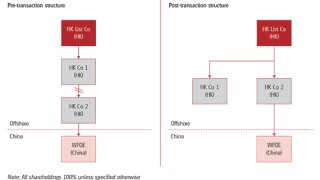
Increasing cross-border business and investment has made the holding of assets overseas through offshore accounts increasingly common. This has become a new tax battleground for businesses and governments. Charles Kinsley, Henry Wong, and Eva Chow look at the latest developments regarding these efforts in China, Hong Kong and Taiwan.
-
In accordance with China’s 13th five-year economic development plan, which commenced in 2016, new policy tools such as the environment protection tax (EPT) and a reformed resources tax (RT) are being used to promote a ‘green development philosophy’. Jessica Xie, Flora Fan, William Zhang, and Maria Mei explore these new developments and what they mean for China’s greener future.
-
John Gu, Yvette Chan, Chris Mak, and Sam Fan explore the M&A tax challenges arising in hot sectors like TMT and healthcare, and for take-private transactions, establishing how investors can best get prepared. They note how, given the pace of developments and tax uncertainties, there is a need for the China tax authorities to provide greater clarity. More than ever, appropriate tax planning is crucial for M&A transactions.
-
The disparity between China’s rapidly developing and evolving digital economy and its largely traditional economy-based tax administration system is growing, and is creating challenges for both the tax authorities and taxpayers. Sunny Leung, Benjamin Lu, Jessie Zhang, and Grace Luo explore the issues.
-
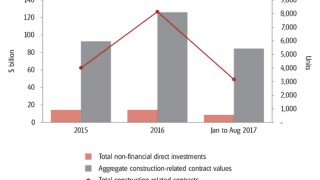
As companies embark on overseas investment and projects under China’s Belt and Road Initiative (BRI), they are increasingly encountering tax issues in emerging and developing countries. Michael Wong, Joseph Tam, Alan O’Connor, Karen Lin, and Cloris Li look at key corporate tax issues they may face, and how the SAT is supporting Chinese companies to navigate through these overseas tax challenges.
-
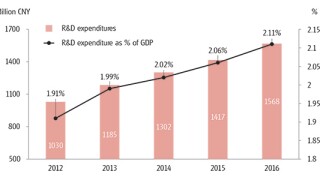
Yang Bin, Rachel Guan, Josephine Jiang, and Henry Ngai examine the refinements being made to China’s innovation incentives, and their importance as a driver of continued Chinese economic growth.