
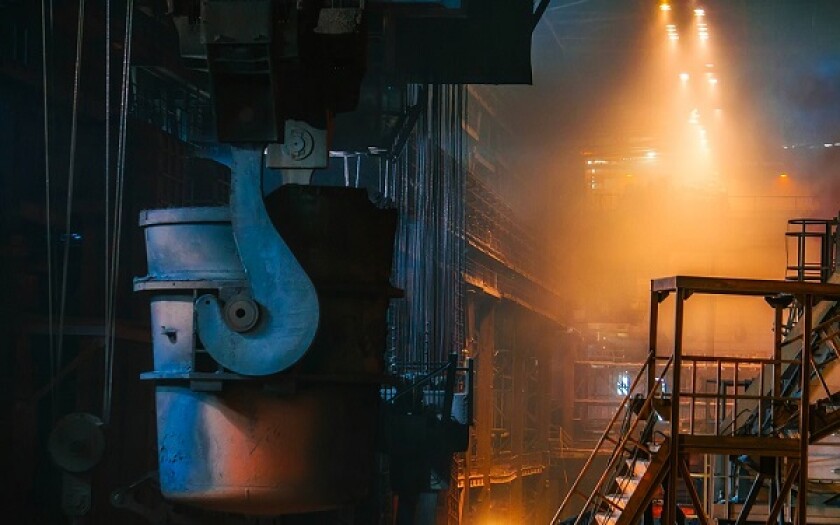
The significance of the domestic steel industry for Malaysia’s prosperity and welfare cannot be over-emphasised. The domestic steel industry is a MYR 40 billion ($10 billion) industry employing around 150,000 people.
Malaysia’s High Court recently ruled in favour of maintaining safeguard duties that will help towards protecting the domestic sector, but the judgment could harm foreign manufacturers that have been exporting cheap and large volumes of steel into the country.
Background to the case
Until recently, Malaysia was at the forefront of the regional steel industry in South East Asia in terms of crude steel production. Malaysians took immense pride in having developed indigenous technologies that won accolades from industry players.
However, its pole position was overtaken by neighbouring countries, as all countries seem to have taken the path of protecting their respective steel industries through tariff and non-tariff measures.
This of course extends beyond South East Asia, where trading giants such as the US and the European Union have all placed emphasis on protecting their steel industries.
This protectionism has not escaped the World Trade Organisation (WTO) either, which has introduced a safeguard measure to protect trade and counteract the sudden and sharp increase of imports of a product that causes serious harm to a domestic market.
Although this safeguard duty can be imposed if such circumstances arise, national interest must be taken into account when deciding to introduce such a tariff.
In only the second time in Malaysia’s history, the government imposed definitive and final safeguard duties on steel wired rods and deformed bar in coils (steel wire rods) imported into Malaysia, starting from April 14 2017 at 13.9%, reducing to 12.9% and 11.9% in the subsequent two years.
This duty was introduced following a petition filed by the Malaysia Steel Association (MSA) on behalf of the domestic industry to the Ministry of International Trade & Industry (MITI).
The MSA stressed in the petition that the domestic industry has suffered tremendously owing to the continuous dumping of steel products into Malaysia and the increase in imports over the past few years.
The petition further stated that the serious harm suffered by the whole steel industry because of an increase in imports was evidenced by recent plant closures, under-utilisation of production capacities and a massive retrenchment of workers. Thus, the damage suffered has had profound far-reaching effects adversely affecting the socio-economic wellbeing of the nation.
Safeguard duties challenged
The government’s imposition of safeguard duties was met with strong resistance by the importers based in Malaysia, who collectively claimed, through the Steel Wire Association of Malaysia (SWAM), that the safeguard duties were wrongly imposed.
On June 15 2017, SWAM filed a judicial review application seeking to quash the MITI’s decision to introduce the safeguards.
The SWAM argued that:
The MITI did not notify the WTO committee on safeguards prior to imposing the safeguard duties, which is allegedly a requirement under the WTO Agreement on Safeguards;
The MITI failed to provide any opportunity to member states of the WTO for consultation on the safeguard duties; and
Licensed manufacturing warehouses (LMWs) were not excluded from the safeguard duties. SWAM’s contention is that LMWs are exempted from all customs duties and, therefore, the MITI’s decision of not excluding them is illegal.
High Court’s decision
Lee Hishammuddin Allen & Gledhill acted for the MSA in the proceedings, and argued on a preliminary basis that section 29 of the Safeguards Act clearly states that the MITI merely makes a recommendation to the Minister of Finance on the imposition of safeguard duties, who is the one authorised to impose definitive safeguard duties. As such, the decision maker is the finance minister and not the MITI.
Thus, by merely naming the MITI, SWAM has named the wrong party in the proceedings. This point was swiftly acknowledged and agreed by the High Court, which stated that the MITI is not the final decision maker and, as such, SWAM had sued the wrong party.
Further, the High Court also agreed with Lee Hishammuddin Allen & Gledhill’s contention that SWAM’s allegation on the need for notifying the WTO committee on safeguards does not concern SWAM. In other words, SWAM did not have any standing to contest this issue, as notification to the WTO committee only affects member states (countries) of the WTO Agreement. SWAM is merely an association representing importers of steel based on Malaysia. In any event, under Article 19 of the General Agreement on Tariffs and Trade (GATT), it gives leeway to member states in terms of timing of notifications in certain circumstances.
On the issue of LMWs raised by SWAM, the High Court also ruled convincingly that it is the Customs Department and the Ministry of Finance that are empowered under law to give an exemption of safeguard duties to the LMWs. Nothing in the Safeguards Act allows the MITI to exempt LMWs from safeguard duties. In fact, the law is clear that the MITI cannot step into the shoes of the Customs Department or the Ministry of Finance.
Premised on the above grounds, the High Court dismissed SWAM’s challenge on June 27 2018 and confirmed that the safeguard duties will be maintained.
This landmark decision by the High Court will certainly benefit the local steel manufacturers and rejuvenate the steel industry. It is seen as a temporary relief for the manufacturers from the effects of cheap and large volumes of steel coming into Malaysia. In fact, any duties with rates above 10%, such as this one, will be a major deterrent for manufacturers located in other countries to dump their products into Malaysia.
To put it simply, despite living in an era where globalisation has thrived, there is a limit to free trade. Not only Malaysia, but various other countries have gone to great lengths to protect their respective steel industries.
This is also nicely summed up in the words of the new Malaysian Prime Minister, Tun Dr Mahathir Mohamad, who said on June 25: “I don’t believe in free trade, absolute free trade, because when the competition is between the weak and the strong, you need to have some protection for the weak.”
This article is authored by S. Saravana Kumar and Jason Tan from Lee Hishammuddin Allen & Gledhill.








