

The government has repeatedly stated that the carbon scheme is essential in continuing the fight against climate change and reducing greenhouse gas emissions, however the measure could be removed as early as next year if the opposition comes to power, and if poll ratings continue to fall, Gillard could be ousted even before then.
The carbon pricing mechanism is scheduled to transition to an emissions trading scheme in 2015, similar to the scheme employed in Europe, if it makes it past the election.
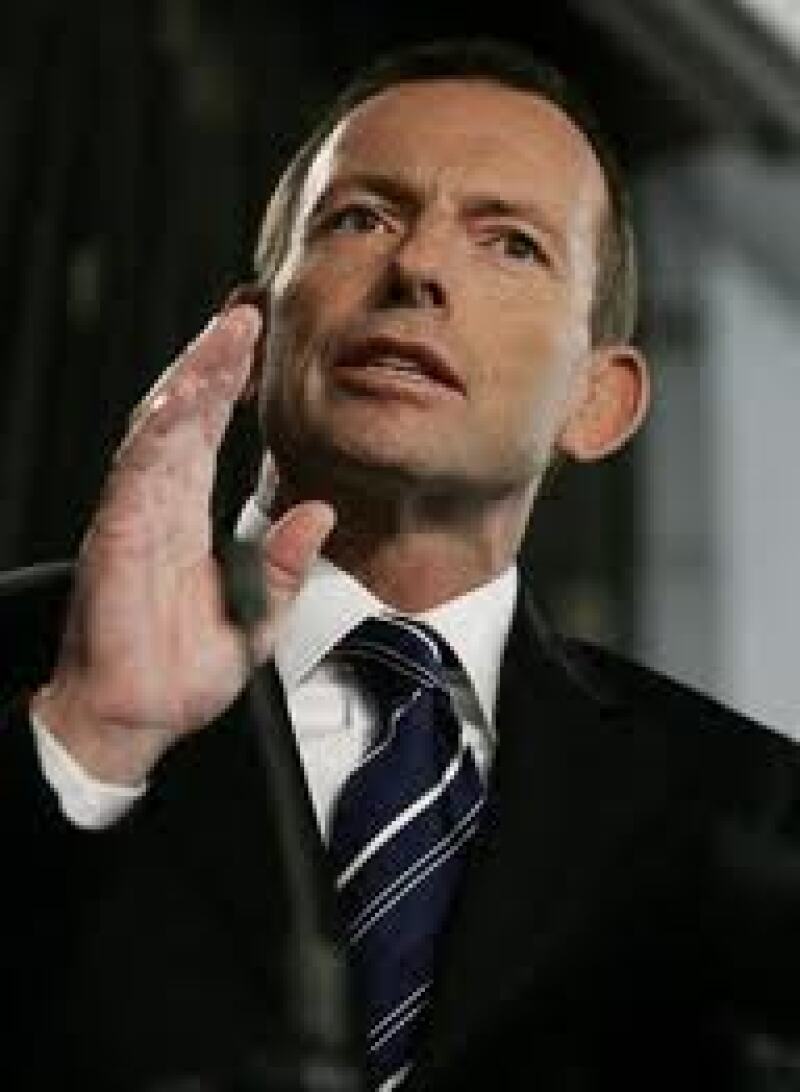
Tony Abbott (pictured left), leader of the opposition, has vowed to repeal the tax if his Liberal party wins the next election, due to be held in 2013, and with the incumbent prime minister’s reputation and popularity with the electorate continuing to languish, an opposition victory is looking likely.
Gillard performed a dramatic u-turn by going back on her pre-election promise not to introduce a carbon tax, and resentment has grown from that point, with a Lowy Institute poll recently finding that 63% of voters are opposed to the tax.
And a Neilson survey released this morning indicates that Gillard’s Labor party has 42% support, while the opposition coalition has 58%, suggesting that both Labor and the carbon tax will be gone next year, though Independent MP Andrew Wilkie has warned that repealing the tax will not be as easy as Abbott may think.
Wilkie sees similarities with the GST, saying that despite the tax being controversial and unpopular, once “people have realised the sky hasn’t fallen in, they see the sense in the reform, they live with it a while, I think it becomes increasingly difficult for Tony Abbott to unwind it in the future”.
The uncertainty created by Gillard’s u-turn, and compounded by Abbott’s vow to remove the tax if elected, has had a negative effect on investment and has led to a fierce PR war with both the government and opposition launching expensive campaigns to try and win over the public.
The issue continues to be divisive, but Gillard must now hope that businesses focus on certainty and that by the time of the 2013 election, as Wilkie suggests, they will have grown accustomed to the scheme.
She will be encouraged by the fact that yesterday, as the tax officially took effect, 300 big businesses issued a statement of support for the scheme and bemoaned the opposition’s uncertainty-creating tactics.
But this raised another argument against Gillard’s decision to plough ahead with the carbon price. Estimates indicate that the impact of the tax will equate to $3.30 a week, but the government will be providing over $10 a week in tax relief, which suggests the revenue-raising ability of the measure will be severely limited for now, and that exemptions and other releifs will negate the impact of the green measure. Reports of large polluters receiving between 65% and 95% of their permits for free, among other exemptions, have severely harmed the government’s reputation in the run up to the 2013 election.
The carbon tax is set to be an election-defining issue and, should Abbott be victorious, it could also be one of the most short-lived climate change policies ever to have been implemented. When Gillard looks back on her statement that “There will be no carbon tax under any government I lead”, she will be wishing she had either stuck to that promise, or, more likely, never uttered it in the first place.
FURTHER READING:
Australia’s carbon tax plans fail to please
Australians told carbon tax “manageable”, despite unknowns
Airlines must adapt as Australia’s carbon tax hits
Why Australia’s carbon tax will prove ineffective
Australian steel company wants government handout over carbon tax
Gillard’s indirect tax plans still ruffling feathers
Report suggests Australian carbon tax details as popularity falls further







