
HMRC releases UK GAAR consultation

International Tax Review is part of Legal Benchmarking Limited, 1-2 Paris Garden, London, SE1 8ND

Copyright © Legal Benchmarking Limited and its affiliated companies 2026

Accessibility | Terms of Use | Privacy Policy | Modern Slavery Statement

HMRC releases UK GAAR consultation

aaronson.jpg

HM Revenue & Customs today released the long-awaited consultation document on the UK general anti-abuse rule (GAAR).

Today’s consultation document provides more detail on the target and scope of the GAAR, including the taxes to which it would apply. The document confirms that it would apply to income tax, corporation tax (including the linked bank levy), capital gains tax, petroleum revenue tax, stamp duty land tax and national insurance contributions (though this will require separate legislation), while VAT would be excluded due to “potentially difficult interactions with the doctrine of abuse of law”.

Francesca Lagerberg, head of tax at Grant Thornton, commented on the presence of many of the provisions recommended by Graham Aaronson QC – the man charged with leading the government’s study group into the feasibility of a UK GAAR.

aaronson.jpg

“After months of discussion, the GAAR is now out for consultation and closely follows the agenda set by Graham Aaronson QC’s report last year. There is a proposed legislative framework and the promise of an advisory panel and guidance to help the UK come to grips with a new tax world with a broad ranged anti-avoidance provision in place,” said Lagerberg.

In line with Aaronson’s recommendation, the government announced in March’s budget that a broad spectrum anti-avoidance rule would not be beneficial for the UK tax system, favouring instead a more targeted approach.                                                                                                                                               Graham Aaronson

Despite this latest development, there remain the same concerns over the blurry line between complicated but admissible tax planning, and egregious or abusive tax planning.                            

“The key will be what is found to be abusive and whether it will be possible to easily differentiate the commercially complex from the purely tax motivated scheme. The indications of what will or won’t be caught are likely to be picked over in the courts for many years to come,” said Lagerberg.
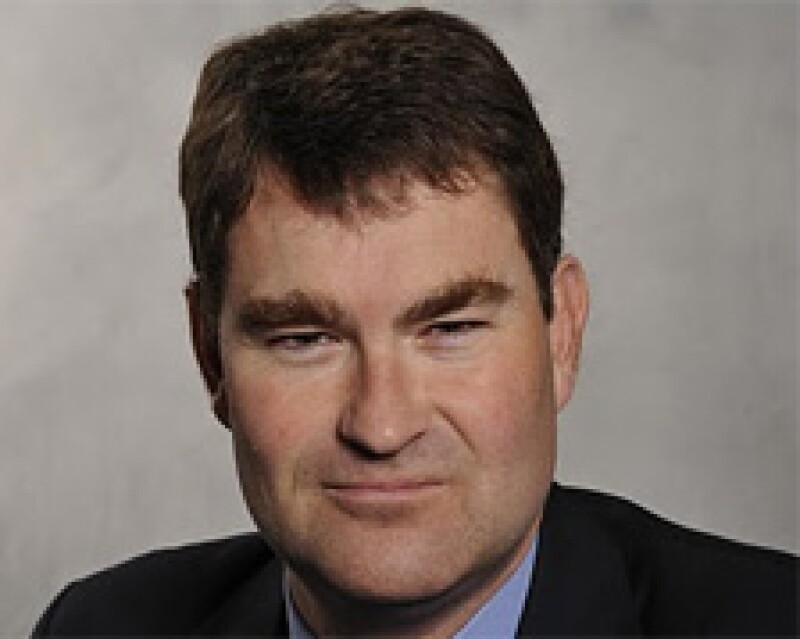
gauke.jpg

David Gauke, Exchequer Secretary to the Treasury said he believes the GAAR would work effectively in tandem with the authorities’ other tools to deter harmful practices.

“A GAAR will strengthen the government’s anti-avoidance strategy and complement the existing tools HMRC has at its disposal to tackle avoidance,” said Gauke. “It will act as a deterrent to those engaging in artificial and abusive avoidance schemes and where such schemes persist the GAAR will improve HMRC’s ability to tackle them effectively.”

David Gauke

The closing date for comments to be submitted is September 14 2012.

International Tax Review has read the 48-page document so you do not have to, with insight from the country's leading advisers.

more across site & shared bottom lb ros

More from across our site

Hany Elnaggar examines how the OECD’s global minimum tax is reshaping the GCC’s investment incentive landscape, shifting the region from rate-based competition toward substance-driven economic positioning
The acquisition of a two-partner practice from Stephenson Harwood means that Charles Russell Speechlys has the largest private client team in Asia, the firm claimed
Complex and constantly shifting rules on global mobility mean ‘the risk is too great’ for staff to work abroad on personal time, EY’s Maureen Flood tells ITR
While it’s great that the OECD is alive to multinationals’ fears of being caught in a compliance trap, the ‘common understanding’ illustrates a worrying lack of readiness
Rising demand for specialist expertise has fuelled the growth in tax partner headcounts, Cain Dwyer found; in other news, Switzerland has been urged to reconsider pillar two
An OECD report on the taxation of the digital economy is expected by the end of 2026, according to the group of nations
Trophy assets are evolving from personal indulgences to structured investments, prompting family offices to prioritise tax efficiency, governance discipline, and cross-border compliance
As demand for complex, cross-border private client counsel spikes, Patrick McCormick sees opportunity in starting from scratch
As part of an exclusive global alliance, KPMG will become one of Anthropic’s ‘preferred consultants’ for private equity
In the second part of this series, the focus shifts to how taxpayers can manage ongoing risks across the lifecycle of cross-border structures
Gift this article


