Asia Tax Forum 2016 - the full story

Asia Tax Forum 2016 - the full story

asia tax

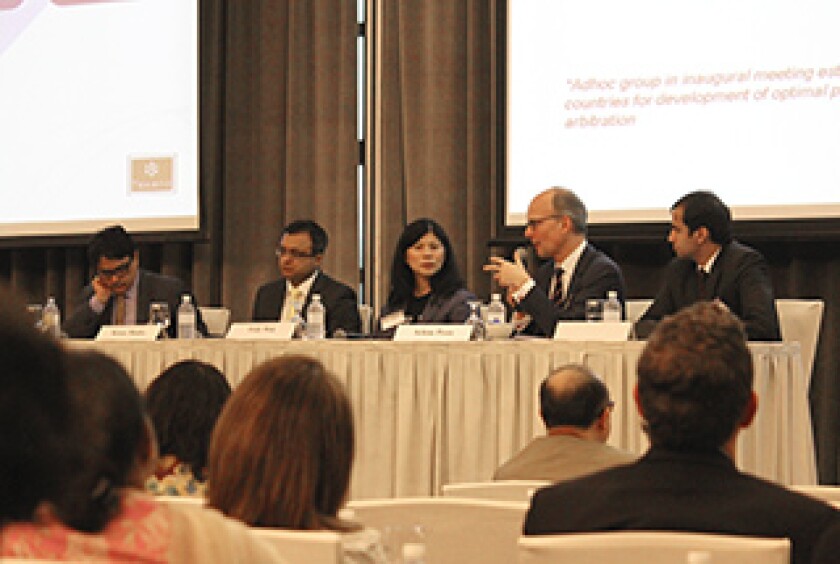
It was difficult to escape the overhang of BEPS at International Tax Review's Asia Tax Forum in Singapore this year.

It was difficult to escape the overhang of BEPS at International Tax Review's Asia Tax Forum in Singapore this year. 

Though the OECD, which devised the BEPS Action Plan and led the work on its formulation, has few members in the Asia-Pacific region, it was clear from the time Achim Pross, of the Organisastion's Centre for Tax Policy and Administration (CTPA) stood up to give the  keynote address at the beginning of the conference, that interest in the topic was high.  The OECD has worked hard to include non-members in the discussions on the future shape of the international tax system, culminating in the opening up this year of the work on BEPS being done by the OECD's Committee on Fiscal Affairs, which sets the CTPA's agenda, to any jurisdiction that was prepared to accept the minimum standards reached in the Action Plan.

The same level of interest in the Action Plan - and its implementation, the next task for the OECD - continued over the two days of May 4 and 5, as discussion covered Asian and international developments in areas such as dispute resolution and transfer pricing.

Moderators from firms such as Baker & McKenzie; BMR Legal, Taxand India;  KPMG; Lee & Ko and Withers led the panels, which also included in-house tax advisers from companies such as Abbvie, Caterpillar, MetLife and Sony.

Here are the highlights from the event: 

Day One

Keynote speech

Achim Pross, Head of International Cooperation and Tax Administration Division, Centre for Tax Policy and Administration, OECD

  • Country-by-country reporting (CBCR) is a long-term project to create a level playing field not based on tax secrecy.

  • Exchange of information and BEPS are two very different projects.

  • BEPS project was aimed at tackling a lack of transparency, lack of coherence and a lack of substance, or the artificial segregation of taxable income from the activities that generate it.

  • BEPS actions split into minimum standards (Actions 2 – 5); reinforced international standards (Action 6 – 10); common approaches and best practices (Actions 11 – 14) and analytical reports and measuring BEPS (Actions 1 and 15).

  • 62 countries now directly involved in work of OECD Committee on Fiscal Affairs.

  • BEPS work fast-paced, inclusive and transparent.

  • BEPS not finished. Still more work to be done, eg, interest deductibility; harmful tax practices; treaty abuse; avoidance of permanent establishment.

  • Common Reporting Standard: 98 jurisdictions now committed to exchange by 2017 or 2018; at the time of the Asia Tax Forum, two – Panama and Bahrain - had not, but on May 11 both agreed to.

  • 80 have signed CRS Multilateral Competent Authority Agreement [On May 12, one week after the Asia Tax Forum, during the meeting of the Forum on Tax Administration in Beijing, Israel and the Russian Federation became the 81st and 82nd jurisdictions to sign the CRS MCAA]

Hot Topics in Asia Pacific Taxation: Is it all about BEPS? Really?

  • Tax function is a cost so you have to work closely with the company.

  • Asia tax environment changing; formerly based on tax incentives and the export of goods and services.

  • Important to understand business transactions and to be able to be explain these to the tax authorities.

  • More anti-avoidance measures, eg General Anti-Avoidance Rule (GAAR); specific anti-avoidance rules (SAAR) and Limitation on Benefits (LoB).

  • GAAR in India: knee-jerk reaction after last Vodafone case.

  • What skills do you need in your tax functions to manage changing relationship with tax authorities?

  • Remember, tax policy making is a political process, so you have to think of what will motivate the political decision-makers.

Hot Topics in International Tax (US, EU and OECD)

  • Inversions: Irish changes to residency rules. Grandfathered but existing rules will be scrapped completely by 2021. 

  • Knowledge development / patent / innovation boxes on the increase.

  • Attraction of UK includes generous participation exemption regime, low tax rate etc

  • But anti-avoidance measures in UK too, eg, interest deductibility limit; criminal liability for company employees who facilitate tax evasion.

  • Regulatory more than tax concern about Brexit and the impact on passporting; US companies and banks like to come into Europe through London.

  • Difficult to think of substantive statutory change to US tax code in the last eight years.

  • “Silly season” as far as tax proposals of US presidential candidates are concerned. Donald Trump would slash rates but greatly add to the deficit; Hillary Clinton’s plans would broadly end up with the same tax burden as now. 

BEPS: Everything there is to know in 75 minutes

  • Not a surprise that mandatory disclosure was slower to be taken up as a minimum standard.

  • Mandatory arbitration not a minimum standard; it will be in multilateral instrument (MLI) so jurisdictions won’t be guilty of violating any commitments if they don’t accept it.

  • MLI is mechanism for a fast-track tool to get into treaties.

  • Questions to be answered: LoB or principal-purpose test; what type of arbitration? Scope of MLI.

  • Also questions about which accounting standards to use for CBCR.

  • Disparity between what is discussed in CBCR and how the authorities assess your value chain. Still traditional methods.

  • CBCR filed in country of parent; competent authority agreements with jurisdictions where you have subs or PE take care of the rest.

  • Discussions on-going with tax authorities about intelligent use of CBCR info.

  • BEPS proposals significantly lower the threshold for independent agent PE test.

  • Much tighter rules on profit attribution required.

  • Perplexing that headquarter charges thought of as base-eroding payments.

  • Very high risk of economic double taxation if current situation on HQ charges persists.

ENFORCEMENT IN SOUTH EAST ASIA: What's with the aggression, man?

  • No withholding tax on headquarter charges but still can be offset against corporation tax in local country.

  • Use of local comparables proving to be problematic.

  • No substitute for insight from your local team or adviser.

  • Move towards centralisation, eg CBCR, but be careful to apply to local situation.

  • Preparation for meeting tax authorities – presentation of documentation, followed up by explanatory slides, is very useful.

  • China, Taiwan don’t recognise client-adviser privilege. Communication with lawyer privileged in Singapore.

  • Keep number of people involved,  or who know about a transaction, small.

CHINA: The only constant is change

  • Multiple-rate, VAT system in force from May 1 2016.

  • Foreign companies cannot register for VAT.

  • VAT occurs at branch level, not legal entity; no grouping.

  • No repayment of excess, VAT credit refunds.

  • VAT on financial services, one of the few jurisdictions worldwide to do so.

  • Some services zero-rated elsewhere are exempt in China.

  • Moving to self-assessment system for treaty benefits.

  • Announcement 7: indirect transfer of assets by a nonresident enterprise, replaces 698, though not entirely; expands scope of penalties for not reporting transaction that turns out to be taxable.

  • Can you take tax authorities to court in China? The answer depends on which tax adviser you ask!

  • Only the end of beginning of further tax policy and administrative changes.

  • Need for business to be more proactive. 


Day Two


INDIRECT TAXES: China and India - Who will win the race to complete their system?

  • China won! VAT system in effect from May 1 2016.

  • New prediction for GST introduction in India: October 1 2017.

  • How to operate the Interstate GST (IGST) system in India is big question.

  • VAT on financial services, consumer-to-consumer transactions in China.

  • New VAT system in China should be seen as a business change not a tax change.

  • Multiple decision-makers (central, provincial, local) on Chinese taxes, so be careful.

  • Need for real-time information systems that collect and credit the VAT at the same time.

 INDIA: Tax Trends and Developments

  • Budget 2016 developments: tax equalisation levy; CBCR; patent box.

  • CBCR marks insatiable desire for information.

  • Penalty provisions for misreporting, underreporting.

  • Dispute resolution trends include mandatory stay where arrears paid; DRP decisions not appealable by tax authorities; more AAR benches; introduction of APA rollback.

  • APA – best thing to happen to TP in the last number of years.

  • Aim to eliminate interstate tax, which isn’t creditable.

DISPUTE RESOLUTION: I don't want to fight you but...

  • Offshore marketing hubs; supply chain restructuring: targets of NZ tax authorities.

  • Contract, conduct, control: key factors.

  • Treaty relief; unilateral tax relief; exemption: Singapore’s methods against double taxation.

KOREA: Still difficult to deal with?

  • Key amendments to Korean tax law in 2016 include foreign investment tax incentive; real property holding company status; VAT on electronic services; automatic exchange of information – Common Reporting Standard; CBCR.

  • Beneficial ownership; entity classification; Supreme Court cases; holding-company litigation.

  • Tax audit trends: taxpayers should always be prepared for a tax raid, which can involve non notification; seizure of books and records, both print and electronic; criminal prosecution

  • Tax appeal cases in tax tribunal have gone from c.7,200 in 2010 to 10,400 in 2015.

  • Tax revenue shortfall of W11 trillion ($10 billion) in 2014. Fewer audits but larger assessments. Net profit from tax collection in 2015 for the first time in four years.

TRANSFER PRICING: How to refine your policies on related-party transactions

  • Three months after end of financial year to submit your local documentation file in Korea, 12 months in Japan. These differences do not help taxpayers.

  • Different levels of development in tax authorities in Asia-Pacific and not every tax administration is the fairest assessor.

  • Sometimes APAs can take so long, they become PPAs (Past Pricing Agreements!)

  • Managing APAs in Australia is time-consuming and costly.

  • Changing views of APAs because of change in how businesses are organised, eg vertically.

  • Diverted Profits Tax assessment almost a prerequisite in the UK before an APA application.

  • Check tested party, profit level indicators are correct before you get to comparables.

  • Nothing unusual about business restructuring, reorganisations so BEPS is a good time to look at how you do things.

more across site & shared bottom lb ros

More from across our site

Ethics seems to be playing a subservient role to an entitlement culture borne out of a pervasive ‘revenue at all costs’ mentality at the big four
Historical World Tax data suggests the ‘largest law firm merger in history’ may not pose a serious threat to the world's leading tax practices
The repeal of Libya’s statute of limitations and tougher enforcement leave taxpayers navigating a high-stakes choice between conciliation and litigation
All the tax partners elevated across the UK, US and Singapore were private client specialists, continuing a market trend of intense investment and competition
Rolf van de Velde, dubbed ‘an expert chosen by experts’, is tasked with scaling Reptune’s self-service compliance offering
The newly combined firm brings together more than 3,500 practitioners across 52 offices, with flagship hubs in Seattle, London, Sydney and New York.
Building a transparent culture, prioritising internal promotions and being different from the big four are all key features of A&M Tax’s ambitious plans for India
ITR’s Indirect Tax Forum 2026 showed why harmonisation remains elusive, advisers must raise their game, and ‘everyone’s data is rubbish’
The firm’s board has reportedly asked Kevin Burrowes to continue until 2028 as the KPMG Australia scandal raises expectations of regulatory reform
A former Deloitte partner will lead the firm’s latest geographic expansion; in other news, Baker McKenzie added six tax lawyers to its partnership
Gift this article