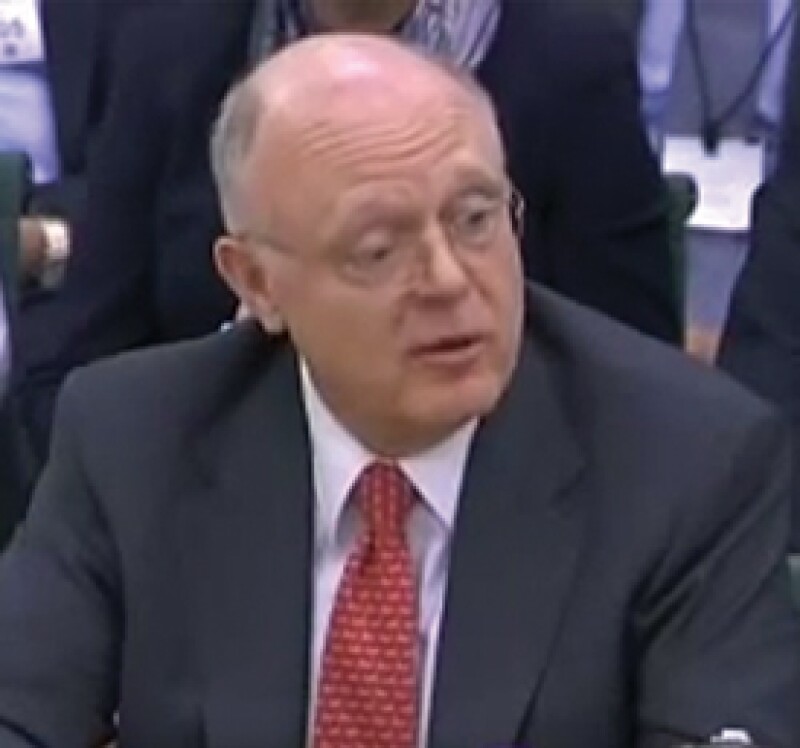
Global Tax 50 2015: Ian Read

International Tax Review is part of Legal Benchmarking Limited, 1-2 Paris Garden, London, SE1 8ND

Copyright © Legal Benchmarking Limited and its affiliated companies 2026

Accessibility | Terms of Use | Privacy Policy | Modern Slavery Statement

Global Tax 50 2015: Ian Read

CEO, Pfizer

Ian Read

Ian Read is a new entry this year

Ian Read, chief executive officer of Viagra-maker Pfizer, makes the Global Tax 50 2015 as a representative of vocal taxpayers that adopt a proactive attitude to taxation, standing up to discuss tax policy issues openly and defending structures in use where necessary.

As a response to increasing transparency and increasing public interest, far too many corporate tax departments and decision-makers in the c-suite opt to bury their heads in the sand, staying below the parapet rather than engaging in constructive debate and explaining how provisions in the tax code impact taxpayer behaviour. But that is not Read's style.

The Scot spearheaded his company's $160 billion acquisition of Irish-headquartered Allergan – the record-breaking deal to create the world's largest drugmaker – in the face of much criticism over the motivation for the move. Political figures including US presidential hopeful Donald Trump denounced the deal as either 'disgusting' or 'unpatriotic', but Read used the transaction to shed light on the dire need for US tax reform.

"The US tax code is an urgent issue that we need to fix," says Read, who claimed during 2015 that US tax provisions left Pfizer (and other US-based companies) attempting to compete with foreign firms "with one hand tied behind our back".

Business groups piled in behind Read with statements of support after he stuck his neck out, highlighting his influence.

"Pfizer's merger deal is the latest, but not the last, effort by a US-headquartered company to use a self-help solution to compete in the global marketplace," says John Engler, president of the Business Roundtable group of American CEOs. "America's outdated tax system is once again pushing US headquarters through the exit door."

Pfizer was among the companies (mostly from the pharmaceutical sector, due to such companies being highly mobile) that brought the inversion debate into centre stage when it tabled a bid for UK-based AstraZeneca in 2014, leading to a political and public backlash which ultimately – together with AstraZeneca concerns over job losses – stymied the deal. But rather than admitting defeat and waiting for the US to update its tax code (which, let's face it, would be a test of anybody's patience), Read sought another potential target before pressing ahead with the Allergan deal in 2015.

Those on Capitol Hill trying to reform US tax legislation should take note: if at first you don't succeed, try, try again.

The Global Tax 50 2015

View the full list and introduction

The top 10 • Ranked in order of influence

1. Margrethe Vestager

2. Pascal Saint-Amans

3. Wang Jun

4. Arun Jaitley

5. Marissa Mayer

6. Will Morris

7. Ian Read

8. Pierre Moscovici

9. Donato Raponi

10. Global Alliance for Tax Justice

The remaining 40 • In alphabetic order

Brigitte Alepin

Andrus Ansip

Tamara Ashford

Mohammed Amine Baina

Piet Battiau

Elise Bean

Monica Bhatia

David Bradbury

Winnie Byanyima

Mauricio Cardenas

Allison Christians

Rita de la Feria

Marlies de Ruiter

Judith Freedman

Meg Hillier

Vanessa Houlder

Kim Jacinto-Henares

Eva Joly

Chris Jordan

Jean-Claude Juncker

Alain Lamassoure

Juliane Kokott

Armando Lara Yaffar

Liao Tizhong

Paige Marvel

Angela Merkel

Zach Mider

Richard Murphy

George Osborne

Achim Pross

Akhilesh Ranjan

Alan Robertson

Paul Ryan

Tove Maria Ryding

Magdalena Sepulveda Carmona

Lee Sheppard

Parthasarathi Shome

Robert Stack

Mike Williams

Ya-wen Yang

more across site & shared bottom lb ros

More from across our site

The acquisition of a two-partner practice from Stephenson Harwood means that Charles Russell Speechlys has the largest private client team in Asia, the firm claimed
Complex and constantly shifting rules on global mobility mean ‘the risk is too great’ for staff to work abroad on personal time, EY’s Maureen Flood tells ITR
While it’s great that the OECD is alive to multinationals’ fears of being caught in a compliance trap, the ‘common understanding’ illustrates a worrying lack of readiness
Rising demand for specialist expertise has fuelled the growth in tax partner headcounts, Cain Dwyer found; in other news, Switzerland has been urged to reconsider pillar two
An OECD report on the taxation of the digital economy is expected by the end of 2026, according to the group of nations
Trophy assets are evolving from personal indulgences to structured investments, prompting family offices to prioritise tax efficiency, governance discipline, and cross-border compliance
As demand for complex, cross-border private client counsel spikes, Patrick McCormick sees opportunity in starting from scratch
As part of an exclusive global alliance, KPMG will become one of Anthropic’s ‘preferred consultants’ for private equity
In the second part of this series, the focus shifts to how taxpayers can manage ongoing risks across the lifecycle of cross-border structures
Jurisdictions have moved to ensure that multinationals are not punished for late GIR filings due to a lack of available filing portals or exchange relationships
Gift this article


