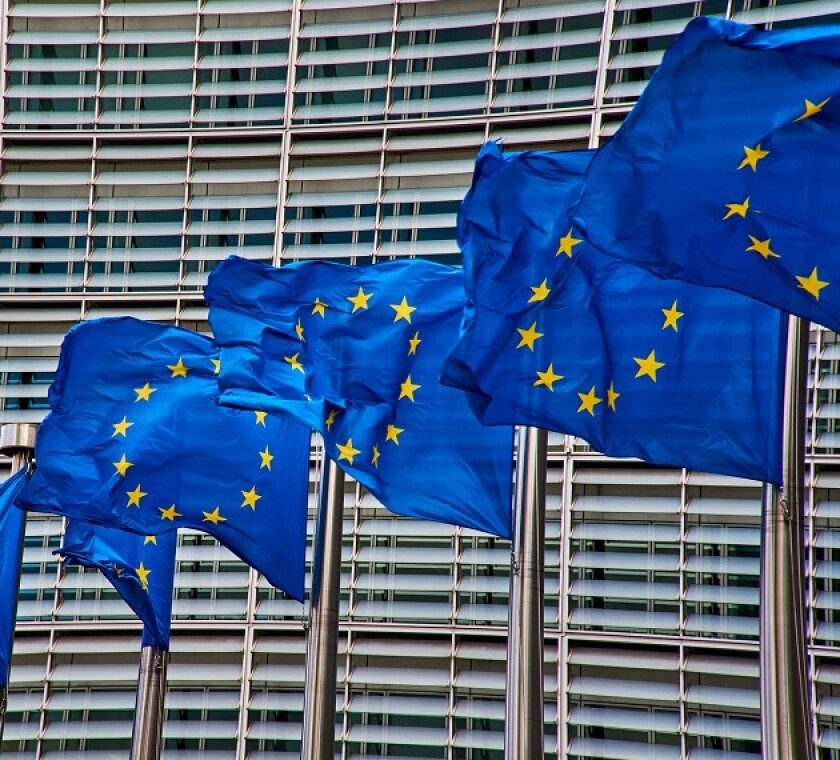
The EU has a crucial role to play in taking the OECD-brokered agreement on pillar two and making it the international standard. The European Commission has drafted a bill to establish the minimum rate across the EU, while it prepares a bill to implement pillar one.
“We believe that the global minimum tax rules can only be implemented if other countries also live up to their political commitments,” said Mihály Varga, the Hungarian finance minister, at the EU finance ministers (ECOFIN) meeting on January 18.
Estonia, Hungary and Poland are not opposing pillar two in principle. These governments signed up to the minimum rate, but they are concerned about implementing a minimum rate without guarantees that pillar one will be implemented too.
However, the European Commission does not plan to wait on pillar one before implementing pillar two. There was always the risk that the EU would face problems in implementing the proposal. Smaller countries with low-tax regimes were likely to oppose the policy.
The OECD brokered an agreement on pillar two with 137 countries in October. This may be the year of global tax reform, but the roadmap for implementation is far from certain. Many countries inside and outside the EU may struggle to reform corporate tax before 2023.
Top headlines
South Africa’s APA programme set to ease TP compliance burden
The South African Revenue Service (SARS) is pushing for the implementation of advance pricing agreements (APAs) to facilitate the filing of transfer pricing (TP) documentation amid the rise in audits.
The transfer pricing (TP) documentation requirements in South Africa remain burdensome, but the tax authority’s proposed model for advance pricing agreements (APAs) could decrease compliance difficulties for taxpayers.
At the same time, the South African government’s expenditure in research and development (R&D) incentives is still too low.
“This is a very positive development because an APA programme would certainly assist with tax certainty for SAS and for taxpayers. Taxpayers have until January 31 to provide comments on this,” said Michael Hewson, director at Graphene Economics.
“South Africa has got a number of treaties, so we could have a potential number of APAs with those countries, which would be positive. The number of APAs incidents across Africa have been growing very slowly, and that’s largely because few countries actually have APAs in the legislation,” he added.
The SARS released a proposed model for establishing an advance pricing agreement (APA) programme in December 2021. The tax authority said the establishment of an APA programme would ease the compliance burden for taxpayers as well as build public trust and confidence in the tax system.
South Africa requires companies meeting the country-by-country reporting (CbCR) threshold or having more than 100 million ZAR ($6.6 million) of cross-border related party transactions to prepare a master file and local fire.
The country has also introduced additional disclosure requirements in its annual tax return, in which the TP section requires taxpayers to list the various cross-border transactions indicating which country and its worth.
Taxpayers await EU public consultation on standardising e-invoicing
The EU’s forthcoming public consultation on the VAT in the Digital Age project offers an opportunity for multinational enterprises (MNEs) to push for a lower compliance burden across the economic bloc.
Tax directors at MNEs are anticipating the launch of a public consultation on the EU’s VAT in the Digital Age project. Companies will be able to offer their perspective on how to achieve consistency in EU member states’ e-invoicing rules.
E-invoicing is either active or planned in more than 13 EU countries, creating a growing compliance problem for companies as the requirements differ significantly by jurisdiction.
VAT in the Digital Age is “a response to the digitalisation of the economy and the new challenges that this poses to European tax authorities and the EU VAT system,” and it represents a “major policy initiative”, according to Alex Baulf, senior director of global indirect tax at Avalara.
The initiative focuses on three key areas:
Single EU VAT registrations, as well as the import one-stop-shop (OSS) and the low-value threshold;
The VAT treatment of the platform economy; and
Digital reporting requirements (DRR) and e-invoicing.
The project was created to address changes in the global economy, including increasing online commerce and the growth of the gig economy. In addition, the project will address tax authorities’ access to unprecedented amounts of taxpayer data across the EU.
Unilateral reporting measures are on the increase as EU member states attempt to minimise VAT revenue lost to fraud. E-invoicing legislation has contributed to decreasing the VAT gap in the EU, yet this remained significant in 2019 at €134 billion ($152 billion).
Crucially, unilateral measures are creating compliance problems for MNEs. There are parallels with the global increase in digital services taxes (DSTs) before the OECD agreement on BEPS, which required MNEs to invest in monitoring developments and compliance solutions. When it comes to e-invoicing, the EU is keen to create some consistency in the measures.
Next week in ITR
ITR will be providing its analysis of what taxpayers can expect from the Indian Union budget on February 1. It is possible that the Indian government will be laying out crucial guidance for implementing digital tax reform, but that is not all.
Meanwhile, the US Senate Finance Committee has its sights on tax avoidance in the pharmaceutical industry. Senator Ron Wyden sent a letter to Giovanni Caforio, CEO of Bristol-Myers Squibb, demanding details on the company’s international tax practices.
The Senate Finance Committee wants to know how Bristol Myers reduced its effective corporate tax rate from about 25% in 2010 to -6.9% in 2012. Yet this could well be the start of tax inquiries into the industry in 2022.
Readers can expect these stories and plenty more next week. Don’t miss out on the key developments. Sign up for a free trial to ITR.