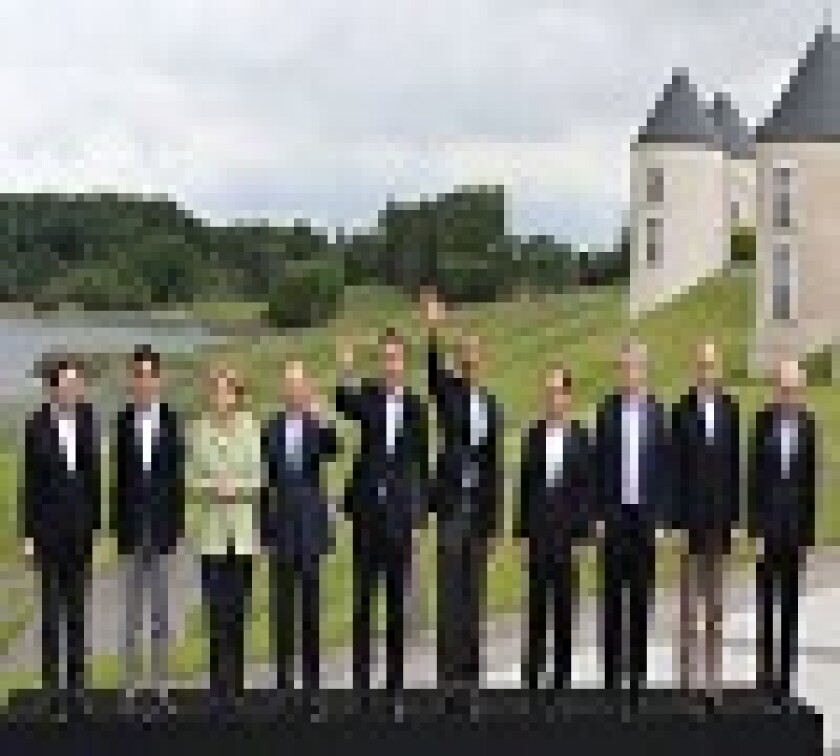
The summit in Lough Erne on June 17 and 18 2013 resulted in a declaration, stating, for example, that: tax authorities should automatically share information to fight tax evasion; countries should change rules that let companies shift profits across borders to avoid taxes; companies should know who really owns them and tax collectors and law enforcers should be able to obtain this information easily; and developing countries should have the information and capacity to collect the taxes they are owed – and other countries have a duty to help them.
“Twelve months on, the picture is disappointing,” said Joseph Stead, senior economic adviser at Christian Aid, UK development agency. “While there are a few bright spots, there are also many broken promises. Developing countries lose more from tax abuse and corruption than they receive in aid; they can’t afford slow progress.”
Stead is right to acknowledge “bright spots”. There has been progress on beneficial ownership, for example, with David Cameron, the UK Prime Minister, committing to the creation of a central, publicly-available register of beneficial ownership information. This is being extended to the UK’s Crown Dependencies and Overseas Territories, though these jurisdictions are resisting a requirement to make the register publicly available, with Guernsey citing data privacy and human rights concerns.
France has also supported the creation of a similar register, but on its scorecard for measuring the extent to which the Lough Erne Declaration points have been followed up on, Christian Aid is critical that such efforts have not been matched across the G8.
Anders Dahlbeck, tax policy adviser at ActionAid, said the lack of action from the G8 on these issues ties into a general bias towards developed countries when it comes to discussion of reforming international tax rules.
One of the Lough Erne commitments was to include developing countries in international talks on how to make multinationals and rich individuals pay their taxes.
“The main problem with the actions taken since Lough Erne is that while there are potential gains for developed countries, they are doing little if anything for developing countries, who are not present at the negotiating table at the OECD, where the new international tax rules are being discussed,” said Dahlbeck.
“This whole wider BEPS agenda and rollout of G20/OECD/G8 actions will only work if everyone fully buys into it, implements and enforces it at the same time in a coordinated way, with only a very narrow bandwidth for interpretation differences regarding definitions and measures, and with all countries trusting each other and agreeing on, and engaging in, efficient dispute resolution,” said Bob van der Made, senior adviser, EU public affairs (direct tax, fiscal state aid and financial transaction tax) at PwC.
Van der Made said he can understand why development charities and tax justice campaigners are keen to maintain pressure on bodies such as the G8, G20 and OECD.
“At the moment it is understood that we are far off from a worldwide consensus on BEPS, so there is bound to be a gap between the international political commitments and symbolism of governments and the current, still-harsh economic and political realities at home, which may lead to different domestic policy choices. In that light, it is understandable that tax justice organisations want to try to keep the heat on,” said van der Made.
Porter McConnell, manager of the Financial Transparency Coalition, agrees with van der Made’s claim that any workable solutions must be truly global in nature and application.
“Financial crime doesn’t respect national borders,” said McConnell. “If there’s a lasting legacy of Lough Erne, it needs to be recognition that the solutions to financial transparency are global. It’s the only way to stop the outflows of illicit cash that are robbing us all.”
US engagement in global efforts
The US also came under attack for the lack of progress it has made on company ownership transparency, which Christian Aid describes as “especially concerning given that it incorporates more than 10 times as many companies as all the world’s tax havens combined”.
Questions are now being raised over America’s willingness to engage in international tax reform efforts, after a statement from lawmakers in Congress said that aggressive action by some foreign countries to levy more taxes on US taxpayers before a consensus has been reached, along with processes established by the OECD, “raises serious questions about the ability of the US to fully participate in the negotiations”.
The statement from Dave Camp, House Ways & Means Committee chairman, and Orrin Hatch, Senate Finance Committee ranking member, said the best way for the US to address potential BEPS issues was through comprehensive domestic reforms to lower the corporate tax rate and modernise the tax code.
“On June 2, a US statement sharply criticised the OECD’s approach on BEPS and in doing so, according to some observers, planted a deliberate bombshell under the whole BEPS exercise and the short timeframes involved and ‘imposed’ on governments,” said van der Made.
“At the same time, the US is part of the G20 which asked the OECD to deliver recommendations on these highly complex and politically sensitive tax and transparency issues with extremely short timeframes for consultation with business and other parties,” he added. “US support for and engagement in BEPS is crucial for the continued credibility of the whole BEPS exercise and the recent US bombshell seems telling.”