
lead
Direct Tax

Trophy assets are evolving from personal indulgences to structured investments, prompting family offices to prioritise tax efficiency, governance discipline, and cross-border compliance
May 21, 2026
features sponsored features special focus local insights
-
 By understanding the implications of the country’s new carbon tax, South African companies can be well placed to help shape policy, satisfy reporting requirements and build a more sustainable business model, says KPMG’s André Boekhoudt
 -
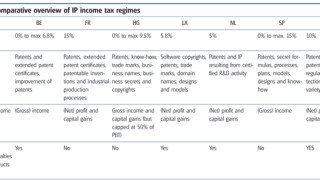
Taxpayers need to make a careful assessment of the best European jurisdiction for a central IP company, as the different regimes have their own features, explain Wim Eynatten and André Schaffers of Deloitte.
-
On February 13 2013, the OECD released a report on tax planning by multinationals that reduces group corporate tax liability to an unacceptably low level, as a first step against base erosion and profit-shifting (BEPS). In the preceding months Starbucks, Google and several others were publicly attacked for not paying their “fair” share. Johann Muller, a member of the international corporate taxation department at the Danish Tax Authority – submitting this article in a personal capacity in advance of the OECD Working Party No 6 meeting in March – examines the issues that need to be addressed when looking at examples 1 and 2 to Annex C of the BEPS report.


Sponsored Features
-
Sponsored by KNAV IndiaIndia’s transfer pricing overhaul expands safe harbours at scale and accelerates advance pricing agreements alongside the statutory recodification of the Income-tax Act, report Uday Ved, Hetav Vasani, and Jainesh Nahar of KNAV
-
Sponsored by insightsoftwareJoin KPMG and insightsoftware on June 25 as ITR presents a free webinar on the evolving role of tax professionals and how technology is driving the transformation
-
Sponsored by DeloitteJess Williams, Jimmy Man, and Olivier Hody of Deloitte explain how tax can be elevated from a post-close support function to a value-realisation tool in M&A transactions through quick wins and longer-term actions


Special Focus
-
Sponsored by YulchonSeveral South Korean transfer pricing cases have established clearer judicial standards emphasising robust comparability analysis and stronger functional and economic evidence. Yulchon tax partners provide practical insights for navigating the heightened requirements
-
Sponsored by RSM IndonesiaIchwan Sukardi and T Qivi Hady Daholi of RSM Indonesia examine how geopolitical conflict and economic volatility are reshaping transfer pricing risk and enforcement, with a particular focus on Southeast Asia and Indonesia
-
Sponsored by Tax PartnerMonika Bieri and Daniel Schönenberger of Tax Partner use a Swiss lens to examine how workforce mobility is reshaping transfer pricing models, and why the location of key decision‑makers is becoming a critical tax risk


Local Insights
-
Sponsored by Lakshmikumaran & SridharanIndia’s Finance Act, 2026 introduces a tax framework for foreign companies using local data centres but leaves several questions unresolved, say S Vasudevan, Prachi Bharadwaj, and Loveena Manaktala of Lakshmikumaran & Sridharan
-
Sponsored by Pérez-LlorcaNicolle Barbetti of Pérez-Llorca explains how the Capitalisation of Companies Incentive has reshaped Portugal’s corporate financing landscape and highlights how binding rulings have clarified key issues in its application
-
Sponsored by PwC ChileNatalia Núñez and Antonia Valdés of PwC Chile analyse the new bill’s tax implications for a key sector, considering the provisions of the Mining Royalty Law


